
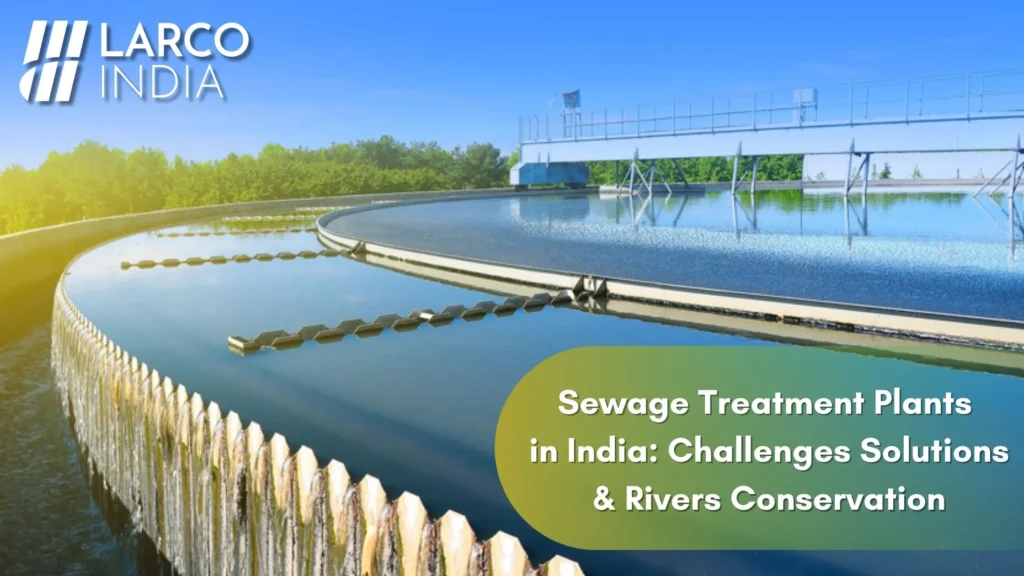
Sewage treatment plants in india play a crucial role in preserving rivers and water bodies by preventing untreated wastewater from entering nature ecosystems.
India is home to some of the world’s most revered rivers — the Ganga, Yamuna, Narmada, Godavari and many others that sustain millions of lives and support rich biodiversity. Yet, rapid urbanisation, industrial growth, and unplanned development are placing unprecedented pressure on these water bodies. Among the most critical challenges is sewage pollution, which has led to severe environmental and public health concerns.
In this context, Sewage Treatment Plants (STPs) emerge as indispensable tools in safeguarding India’s rivers and water ecosystems. At LARCO INDIA PVT LTD, we believe that sustainable water management is not just an option — it’s a responsibility. In this blog, we’ll explore the vital role STPs play and why their adoption is essential for a cleaner, healthier India.
What is a Sewage Treatment Plant (STP)?
A Sewage Treatment Plant is a facility designed to remove contaminants from wastewater — including household sewage and industrial effluents — making it safe for discharge into the environment or for reuse.
Primary Functions of STPs
- Solid separation and removal
- Organic pollutant reduction
- Pathogen elimination
- Water recycling for non-potable uses
By treating wastewater comprehensively, STPs minimize pollution and protect water resources.
Why Sewage Treatment is Critical for India
Despite substantial improvements in policy and infrastructure, several Indian rivers continue to suffer from high levels of untreated sewage discharge. The Central Pollution Control Board (CPCB) reports that urban India generates millions of litres of sewage every day—much of it untreated—directly threatening river health.
Challenges facing sewage treatment plants in India
and why effective STPs matter
- Contamination of drinking water sources
- Loss of aquatic life due to low oxygen levels
- Spread of waterborne diseases
- Ecological imbalance
- Negative impact on agriculture and fisheries
Uncontrolled sewage not only pollutes water but also affects public health and livelihoods.
How Sewage Treatment Plants in India help protect rivers
STPs and River Conservation: A Game Changer
✅ Reducing Pollutant Load
STPs significantly lower biochemical and chemical oxygen demand (BOD/COD), limiting organic pollution that depletes dissolved oxygen in rivers.
✅ Protection of Aquatic Ecosystems
By removing harmful contaminants and pathogens, treated water helps maintain ecological balance and supports biodiversity.
✅ Enhancing Water Reuse
Recycled water from STPs can be safely used for:
- Landscape and garden irrigation
- Industrial cooling processes
- Flushing and cleaning
- Recharge of groundwater
This reduces dependency on freshwater sources, especially crucial in water-scarce regions.
Government Initiatives for sewage Treatment Plants In India
The Indian government has launched several programs to rejuvenate rivers and expand sewage treatment capacity:
- Namami Gange Programme
- Smart Cities Mission
- AMRUT (Atal Mission for Rejuvenation and Urban Transformation)
- Swachh Bharat Mission
These initiatives emphasise scalable and decentralized wastewater management — a space where modern STP technology plays a transformative role.
LARCO INDIA PVT LTD’s Commitment to Water Sustainability
At LARCO INDIA PVT LTD, we specialise in providing high-efficiency sewage treatment solutions tailored for urban bodies, industrial clients, housing societies and municipalities. Our offerings are designed for:
- Maximum pollutant removal efficiency
- Low operational and maintenance costs
- Eco-friendly and energy-efficient systems
- Modular designs for scalability and future expansion
We pride ourselves on delivering turnkey Sewage Treatment Plants solutions in india that help communities protect rivers, conserve water, and meet regulatory standards.
Beyond Treatment: A Collaborative Approach
Simply installing STPs is not enough. For maximum impact:
- Regular monitoring and maintenance is essential
- Community awareness and participation must be encouraged
- Policy enforcement and incentives for wastewater recycling are needed
Together, government bodies, industries, local communities, and solution providers like LARCO INDIA can turn the tide on water pollution.
Conclusion: A Cleaner Future with Every Drop
India’s rivers are not just waterways—they are lifelines of culture, economy, ecology, and heritage. Sewage treatment plants in India are a cornerstone of modern water management, offering an effective strategy to restore and protect these invaluable resources. With stonger policies and
With strategic planning, technology adoption, and collective responsibility, we can look forward to cleaner rivers, safer water and thriving ecosystems.