
TSS vs TDS In Water Treatment
TSS vs TDS is one of the most important comparisons in water and wastewater treatment. Both parameters are used to measure impurities present in water, but they differ in composition, behavior, and treatment methods.
Understanding Total Suspended Solids (TSS) vs Total Dissolved Solids (TDS) helps industries select the right water & wastewater treatment system for effective removal of TSS & TDS from water.
Larco India Pvt. Ltd. specializes in water and wastewater treatment solutions including ETP, STP, RO systems, filtration systems, and turnkey environmental infrastructure projects across India.
What is TSS (Total Suspended Solids)?
TSS refers to solid particles suspended in water that are not dissolved. These particles remain floating in water and can usually be seen with the naked eye.
Common Examples of TSS
- Sand
- Silt
- Mud
- Organic matter
- Algae
- Sludge particles
- Characteristics of High TSS Water
Water containing high TSS generally appears:
- Cloudy
- Turbid
- Dirty
High suspended solids can affect water clarity, increase sludge formation, and reduce treatment efficiency.
What is TDS (Total Dissolved Solids)?
TDS refers to minerals, salts, and dissolved substances completely mixed in water at the molecular level.
Unlike TSS, dissolved solids cannot be visually seen in water.
Common Examples of TDS
- Calcium
- Magnesium
- Sodium
- Chlorides
- Sulfates
Characteristics of High TDS Water
High TDS water may:
- Taste salty or bitter
- Cause scaling in pipelines and boilers
- Affect RO system performance
- Reduce industrial process efficiency
Why TSS and TDS Matter in Wastewater Treatment
Industries and municipal treatment plants continuously monitor TSS and TDS levels to maintain water quality standards and comply with pollution control regulations.
Importance of TSS Monitoring
- Improves treated water clarity
- Reduces sludge handling issues
- Prevents filter choking
- Enhances plant efficiency
Importance of TDS Monitoring
- Essential for RO system protection
- Prevents scaling and corrosion
- Important for water reuse applications
- Helps meet discharge standards
As an environmental engineering company based in Pune, Larco India Pvt. Ltd. provides customized wastewater treatment solutions for industries such as pharmaceuticals, sugar factories, dairies, hotels, hospitals, and municipal corporations.
How is TSS removed?
- Sedimentation tanks
- Clarifiers
- Media filters
- Dissolved Air Flotation (DAF)
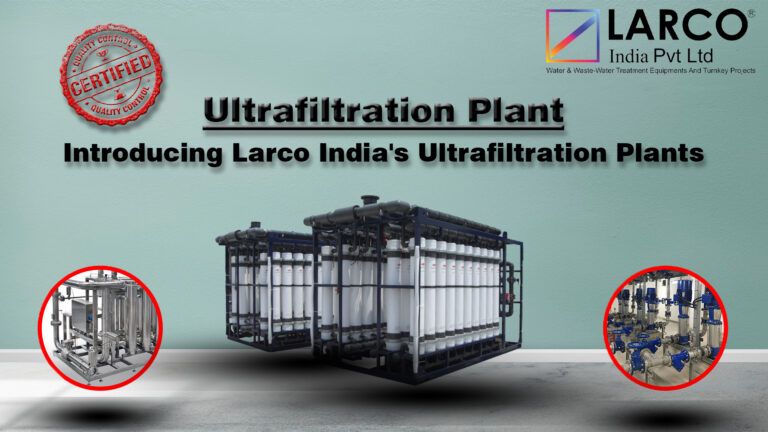
- Ultrafiltration systems
How is TDS removed?
- Reverse Osmosis (RO)
- Demineralization (DM Plant)
- Ion Exchange
- Evaporation systems
Modern ETP and STP systems use advanced technologies to control both suspended and dissolved impurities effectively.
Simple Example to Understand
Mix sand in water → increases TSS
Mix salt in water → increases TDS
This basic example clearly explains the difference between suspended and dissolved solids.
How are TSS and TDS Measured?
TSS and TDS are measured using different testing methods in water analysis laboratories and treatment plants.
TSS Measurement
TSS is typically measured by filtering a water sample and weighing the suspended particles collected on the filter paper. The result is expressed in mg/L (ppm).
TDS Measurement
TDS is commonly measured using:
- TDS meter
- Conductivity meter
- Laboratory evaporation method
Higher conductivity generally indicates higher dissolved solids in water.
Industries Where TSS and TDS Control is Important
Monitoring and controlling TSS and TDS is essential in many industries, including:
- Pharmaceutical industries
- Food processing plants
- Textile industries
- Sugar factories
- Hotels and hospitals
- Chemical manufacturing units
- Municipal wastewater treatment plants
Advanced STP and ETP systems are designed to reduce suspended and dissolved solids effectively for safe discharge and water reuse applications.
Conclusion
TSS vs TDS are critical parameters in water and wastewater treatment. While TSS measures suspended particles causing turbidity, TDS measures dissolved minerals and salts present in water.
Understanding their differences helps industries select the correct treatment technology, improve water quality, protect equipment, and comply with environmental regulations.
With decades of experience in water pollution control systems, Larco India Pvt. Ltd. offers complete turnkey solutions for ETP, STP, RO, filtration, and wastewater management projects across India.
Need the Right Water Treatment Solution?
Get customized water and wastewater treatment solutions from LARCO India based on your water quality and treatment requirements.