
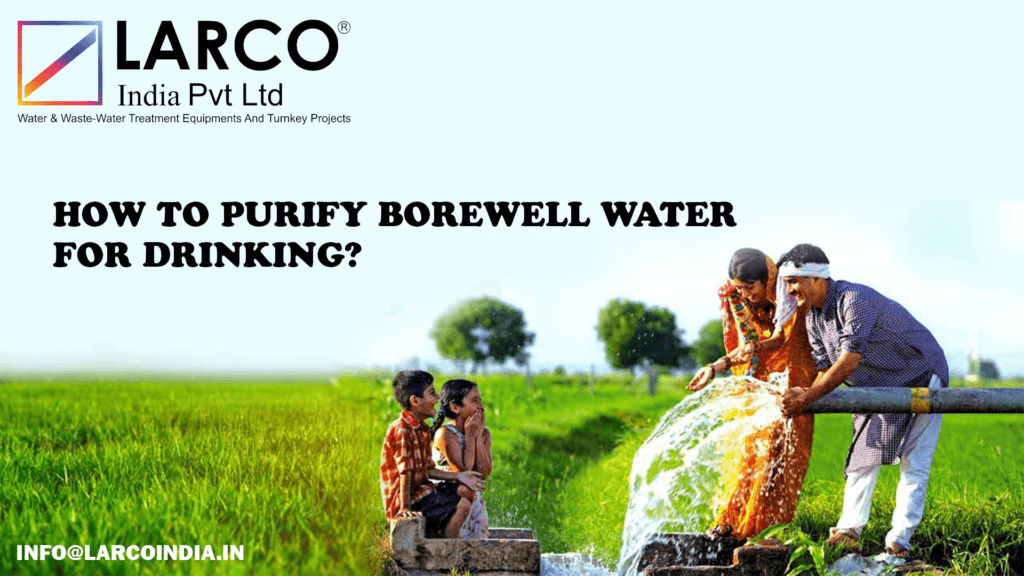
Larco India Pvt Ltd wants to walk you through the process of how to purify borewell water for drinking in this blog, protecting your family’s health. Being able to get clean, safe drinking water is basically necessary for healthy living. Borewells are a typical method of obtaining water in several countries, including India.
Borewell water is widely used for domestic, commercial, and industrial purposes. However, groundwater quality can vary significantly depending on the location, geological conditions, surrounding activities, and the depth of the borewell. While borewell water may appear clean and clear, it can still contain dissolved salts, hardness-causing minerals, microorganisms, iron, and other contaminants. Therefore, proper testing and treatment are essential before using borewell water for drinking.
Why Should Borewell Water Be Tested Before Drinking?
The first step in deciding how to purify borewell water for drinking is to conduct a detailed water quality test. A water test helps identify the specific impurities present in the water and makes it easier to select the right treatment technology.
Common parameters that may need to be checked include:
- pH
- Total Dissolved Solids (TDS)
- Hardness
- Iron and manganese
- Turbidity
- Chloride and sulphate
- Microbiological contamination
- Other location-specific contaminants
A treatment system should be selected based on the actual water quality rather than using the same purification method for every borewell.
Common Problems Found in Borewell Water
1. High Hardness
Borewell water often contains dissolved calcium and magnesium, which can make the water hard. Hard water may cause scale formation in pipes, water heaters, taps, and other appliances.
A water softener can help reduce hardness through an ion exchange process. However, softening alone does not necessarily make water suitable for drinking, so additional purification may be required depending on the water quality.
2. Sediment and Suspended Particles
Sand, silt, rust, and other suspended particles can enter the water supply. Sediment filtration or pressure sand filtration can be used as a pre-treatment step to remove these particles and protect downstream equipment.
3. High TDS and Dissolved Salts
In some areas, borewell water may contain a high concentration of dissolved salts and minerals. Reverse Osmosis (RO) is commonly used when reduction of dissolved impurities is required. Proper pre-treatment can help improve membrane performance and extend the life of the RO system.
4. Iron and Manganese
Excess iron or manganese can affect the colour, taste, and appearance of water and may cause staining on plumbing fixtures. An appropriate iron removal or oxidation and filtration process can be included depending on the concentration and form of these contaminants.
5. Microbial Contamination
Even groundwater sources can become contaminated by microorganisms. Disinfection methods such as UV treatment or other suitable disinfection processes may be used as part of the final treatment stage.
Methods For How To Purify Borewell Water For Drinking
Contaminants In Borewell Water:
Borewell water contains a variety of contaminants, including dissolved salts, heavy metals, microorganisms, and pesticides. From digestive troubles to chronic disorders, these pollutants might affect one’s health. Knowing the pollutants in your borewell water is important before deciding on the best filtering methods.
Testing Borewell Water:
It is imperative to have your borewell water analyzed before beginning any purification process. To find out which specific toxins are present in your water source, Larco India Pvt Ltd offers thorough water testing services. This study aids in choosing the most effective purification methods to guarantee that the water meets the necessary safety criteria. That’s why you have to know how to purify borewell water for drinking.
Purification Methods:
- Reverse Osmosis (RO) Filtration: Reverse osmosis (RO) filtering is a highly effective method for eliminating dissolved pollutants such as salts, heavy metals, and pesticides. Water flows through a semi-permeable membrane to remove pollutants, creating clean drinking water. Larco India Pvt Ltd would provide modern RO systems designed primarily for the purification of borewell water.
- Ultraviolet (UV) sterilization: UV sterilization employs ultraviolet radiation to kill and inactivate bacteria, viruses, and other microorganisms that are present in the water. Water will make it safe for consumption by successfully eliminating biological pollutants with UV sterilizers. Larco India Pvt Ltd offers UV sterilization alternatives for comprehensive water filtration in addition to RO systems.
- Activated Carbon Filtration: Activated carbon filters are effective in removing organic substances, pesticides, and chlorine, which improves the smell and flavor of the water. Larco India Pvt Ltd provides high-quality activated carbon filters for purifying borewell water.
Importance of Regular Maintenance
Installing a water purification system is only the first step. Regular maintenance is important to maintain consistent water quality and system performance.
Routine maintenance may include:
- Cleaning or replacing filter cartridges
- Backwashing pressure filters where applicable
- Checking water softener regeneration
- Monitoring RO membrane performance
- Replacing UV lamps or maintaining disinfection equipment
- Periodic testing of treated water quality
Proper maintenance helps improve the reliability and lifespan of the water treatment system.
Conclusion:
Understanding how to purify borewell water for drinking starts with knowing what is present in the water. A proper water quality test can identify problems such as hardness, sediments, dissolved salts, iron, and microbial contamination. Based on these results, the right combination of filtration, water softening, RO, and disinfection technologies can be selected.
With a properly designed and maintained water treatment system, borewell water can be effectively treated for suitable domestic and drinking-water applications based on the required water quality standards and test results.