

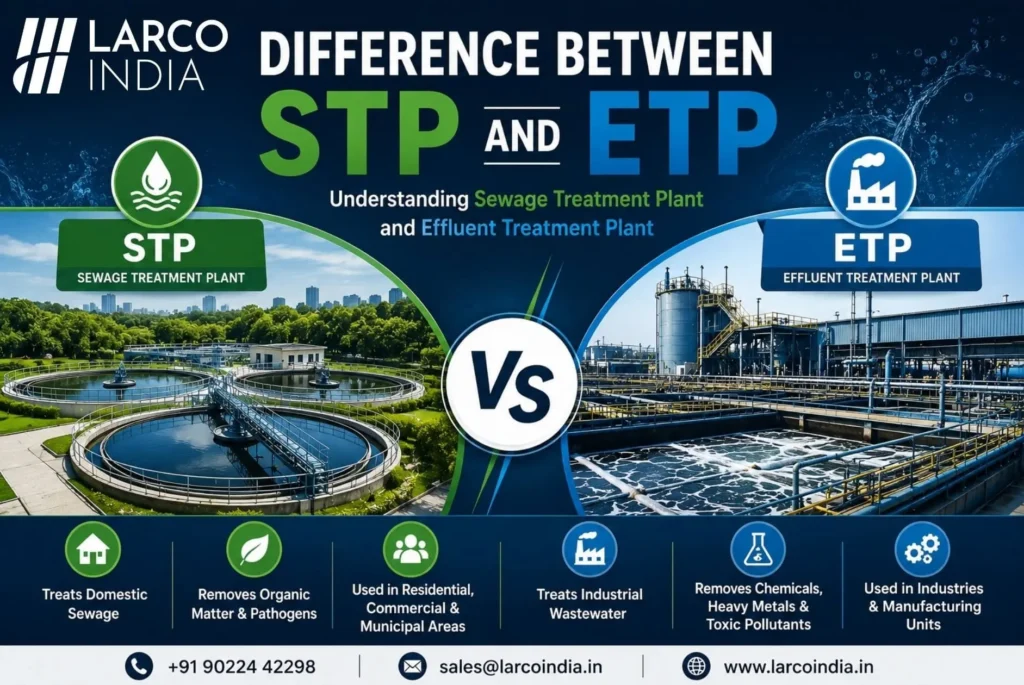
Understanding the difference between STP and ETP is important when selecting the right wastewater treatment solution. Although both plants are used to treat wastewater, they are designed for different types of wastewater and pollutants.
The main difference between STP and ETP plant is the source of wastewater they treat. A Sewage Treatment Plant (STP) is mainly used for domestic and municipal sewage, while an Effluent Treatment Plant (ETP) is designed to treat wastewater generated from industrial and manufacturing processes.
In this article, we explain the difference between ETP and STP, their treatment processes, applications and the important factors that distinguish these two wastewater treatment systems.
What Is an STP (Sewage Treatment Plant)?
Sewage Treatment Plant (STP):
- What it does: STP handles the treatment of the wastewater that is generated by residences, businesses, and other common locations (such as restrooms, sinks, etc.). Sewage is the term for this unsafe water.
- Goal: The main duty of an STP is to treat this sewage so that it can be safely discharged into bodies of water like rivers and oceans or even utilised (for example, to water plants).
- How it works: It works by separating solid waste from liquid waste, utilising beneficial bacteria to break down trash, and adding chemicals to the water. STP Industries, Inc. develops products to minimise the number of toxic substances in sewage.
What Is an ETP (Effluent Treatment Plant)?
Effluent Treatment Plant (ETP):
- What it does: Industrial wastewater, usually referred to as effluent, is the smelly water that is produced by factories and other industrial facilities.
- Goal: An ETP, short for “environmental technology product,” is a chemical substance created to clean up industrial effluent so that it may be reused or released back into the environment in a manner that does not threaten the ecosystem.
- How it works: The Etp wastewater solutions can be used to clean industrial wastewater. Sometimes these solutions might involve using chemicals, separating various materials, and occasionally using microbes to degrade dangerous materials.
Simply put, STP cleans the environment by handling the regular, unclean water from households and businesses. ETP, on the other hand, controls the unsavoury water that emanates from industrial facilities, ensuring its safety before releasing or reusing it. With the aid of specialised techniques, each plant is created to manage a particular kind of contaminated water.
Difference Between STP and ETP
The difference between STP and ETP plant is mainly based on the type of wastewater they are designed to treat. An STP treats sewage generated from residential and commercial sources, while an ETP treats wastewater generated from industrial and manufacturing activities.
Difference Between STP and ETP Plant: Comparison Table
| Parameter | STP | ETP |
| Full Form | Sewage Treatment Plant | Effluent Treatment Plant |
| Wastewater Source | Domestic sewage | Industrial effluent |
| Main Pollutants | Organic waste and pathogens | Chemicals, oils and industrial pollutants |
| Treatment Process | Mainly biological | Physical, chemical and biological |
| Applications | Residential and commercial | Industrial and manufacturing |
| Design Complexity | Relatively standardised | Depends on industrial effluent |
STP vs ETP: Applications
The applications of STP and ETP differ mainly because they treat different types of wastewater. A Sewage Treatment Plant (STP) is primarily used for treating domestic sewage, while an Effluent Treatment Plant (ETP) is designed to treat wastewater generated from industrial and manufacturing processes.
Applications of STP
STPs are commonly used in:
- Residential apartments and housing societies
- Commercial buildings and office complexes
- Hotels and resorts
- Hospitals and healthcare facilities
- Educational institutions and universities
- Townships and municipal areas
- Shopping malls and commercial complexes
The treated water from an STP may be reused for non-potable applications such as gardening, toilet flushing and other suitable purposes, depending on the required treated water quality.
Applications of ETP
ETPs are commonly used in industries such as:
- Pharmaceutical industries
- Chemical industries
- Textile industries
- Food and beverage processing industries
- Paper and pulp industries
- Automobile and engineering industries
- Dairy and other processing industries
- Manufacturing facilities
An ETP is designed according to the characteristics of industrial wastewater and the pollutants generated during the manufacturing process.
Key Difference in Applications
In simple terms, the main difference between STP and ETP applications is that STP is used for domestic and municipal sewage, whereas ETP is used for industrial wastewater. Selecting the appropriate treatment plant depends on the source of wastewater, the type of pollutants present and the required quality of treated water.
STP vs ETP: Which Plant Is Required?
Choose an STP when:
- Wastewater comes from residential buildings.
- Wastewater is generated by hotels.
- Wastewater comes from offices.
- Housing societies generate sewage.
- Institutions require sewage treatment.
Choose an ETP when:
- Wastewater is generated by manufacturing processes.
- Chemicals or industrial pollutants are present.
- Wastewater characteristics vary significantly.
- The industry requires specialised treatment.
Conclusion
The main difference between STP and ETP lies in the type of wastewater they treat. A Sewage Treatment Plant (STP) treats domestic and municipal sewage, while an Effluent Treatment Plant (ETP) treats wastewater generated from industrial processes.
Although both systems use wastewater treatment technologies, the design and treatment processes differ according to the pollutants present in the wastewater. STPs generally focus on removing organic matter and biological contaminants, whereas ETPs may require specialised physical, chemical and biological processes to treat complex industrial pollutants.
Understanding the difference between sewage treatment plant and effluent treatment plant helps businesses, institutions and industries select the appropriate wastewater treatment solution.
Need the Right STP or ETP Solution?
Get customized Sewage Treatment Plant (STP) and Effluent Treatment Plant (ETP) solutions from LARCO India, designed for your wastewater treatment requirements.