

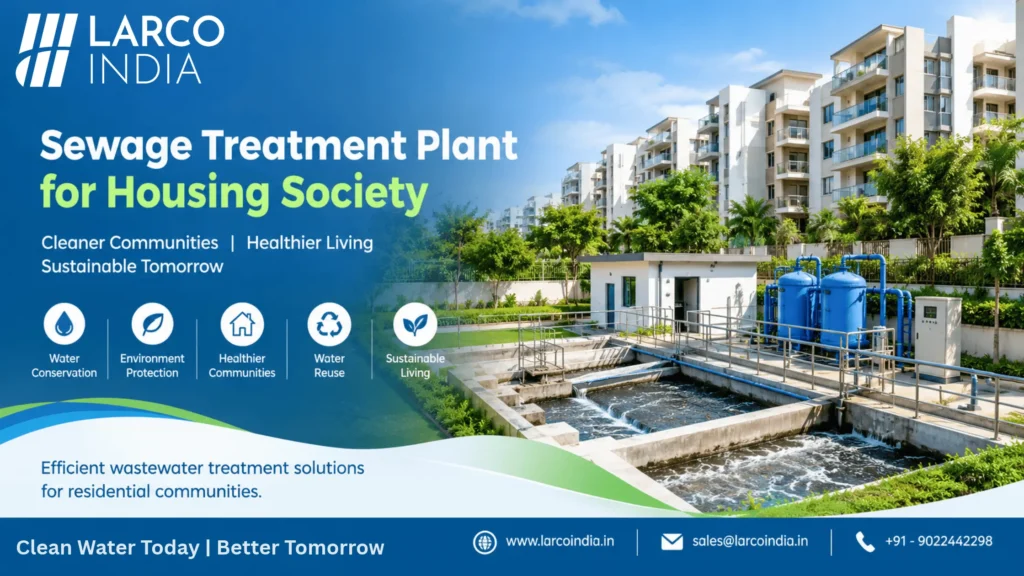
With rapid urbanization and the growing number of residential apartments and gated communities, wastewater management has become a critical concern. Every housing society generates a significant amount of sewage from kitchens, bathrooms, toilets, laundry, and other domestic activities. Without proper treatment, this wastewater can pollute the environment and waste valuable water resources.
A Sewage Treatment Plant for Housing Society is designed to treat domestic wastewater efficiently, ensuring safe disposal or reuse while complying with environmental regulations. Modern STPs not only reduce pollution but also help housing societies recycle water, lower utility costs, and contribute to sustainable living.
What is a Sewage Treatment Plant for Housing Society?
A Sewage Treatment Plant for Housing Society is a wastewater treatment system that removes contaminants, organic matter, suspended solids, and harmful microorganisms from domestic sewage generated within residential communities.
The treated water can be safely reused for:
- Toilet flushing
- Gardening and landscaping
- Road and pavement cleaning
- Car washing
- Cooling towers (where applicable)
This helps reduce the demand for fresh water and promotes efficient water management.
Why is an STP Essential for Housing Societies?
Every residential complex produces wastewater from multiple sources, including:
- Bathrooms
- Toilets
- Kitchens
- Laundry rooms
- Clubhouses
- Swimming pool backwash
- Common utility areas
Installing a Sewage Treatment Plant for Housing Society ensures this wastewater is treated before discharge or reuse, protecting public health and the environment.
How Does a Sewage Treatment Plant Work?
A modern STP treats wastewater in multiple stages:
1. Preliminary Treatment
Large debris, plastics, paper, and grit are removed through screening and grit chambers to protect downstream equipment.
2. Primary Treatment
Wastewater enters a settling tank where heavier suspended solids settle to the bottom, reducing the pollutant load.
3. Biological Treatment
Microorganisms break down organic matter using advanced technologies such as:
- MBBR (Moving Bed Biofilm Reactor)
- SBR (Sequential Batch Reactor)
- Activated Sludge Process (ASP)
This stage significantly reduces BOD (Biochemical Oxygen Demand) and COD (Chemical Oxygen Demand).
4. Secondary Clarification
The treated water is separated from biological sludge, which is recycled or disposed of safely.
5. Tertiary Treatment
Water passes through pressure sand filters, activated carbon filters, and disinfection systems such as UV or chlorination to remove remaining impurities and pathogens.
6. Water Reuse
The treated water is stored for reuse in non-potable applications such as flushing, gardening, and cleaning.
Benefits of a Sewage Treatment Plant for Housing Society
Water Conservation
Recycling treated water reduces dependence on municipal water and borewells, helping conserve freshwater resources.
Lower Water Bills
Using recycled water for non-drinking purposes significantly reduces water procurement costs.
Environmental Protection
Rivers, lakes, and groundwater Pollution can be avoided with proper wastewater treatment.
Regulatory Compliance
An STP helps housing societies comply with the guidelines of the Central Pollution Control Board (CPCB).
Improved Hygiene
Treating sewage effectively eliminates harmful bacteria, viruses, and unpleasant odors, creating a healthier living environment.
Sustainable Living
Installing an STP supports green building initiatives and demonstrates a commitment to responsible environmental practices.
Applications of Treated Water
Treated water from a Sewage Treatment Plant for Housing Society can be used for:
- Garden irrigation
- Landscape maintenance
- Toilet flushing
- Washing common areas
- Vehicle cleaning
- Firewater storage (subject to local regulations)
- Cooling tower makeup water (after suitable treatment)
Choosing the Right STP for Your Housing Society
When selecting an STP, consider:
- Number of apartments and residents
- Daily sewage generation
- Available installation space
- Technology (MBBR, SBR, ASP)
- Energy efficiency
- Automation features
- Ease of maintenance
- Future expansion requirements
A properly designed STP ensures reliable performance, low operating costs, and long-term efficiency.
Why Choose LARCO India?
LARCO India is a trusted manufacturer and supplier of Sewage Treatment Plants for Housing Societies across India. We provide customized, energy-efficient, and CPCB-compliant STP solutions for residential apartments, gated communities, villas, and townships.
Our services include:
- STP design and engineering
- Manufacturing and supply
- Installation and commissioning
- Operation and maintenance support
- Upgradation of existing STPs
- Water recycling solutions
With decades of experience in water and wastewater treatment, LARCO India delivers reliable turnkey solutions that help residential communities manage wastewater effectively.
Conclusion
A Sewage Treatment Plant for Housing Society is no longer a luxury—it is an essential infrastructure for modern residential developments. By treating and reusing wastewater, housing societies can reduce water consumption, lower operational costs, protect the environment, and comply with pollution control regulations.
If you are looking for a reliable and efficient STP solution, LARCO India offers customized systems designed to meet the unique wastewater treatment needs of residential communities.
Need an STP for Your Housing Society?
LARCO India provides customized sewage treatment solutions for residential societies, with installation and AMC support.
Get a Free Consultation Today!